
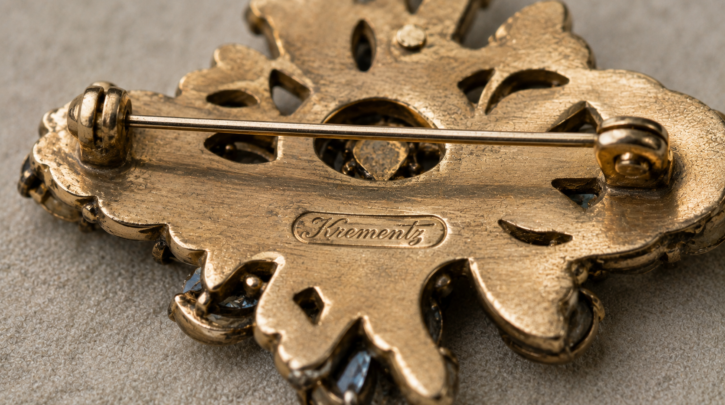

Whether a piece of costume jewelry is signed or unsigned is one of the single biggest factors in how easy it is to research and, often, how much it’s worth — an attributed piece from a recognized maker draws meaningfully more collector interest than an unattributed one, even when construction quality is comparable.
Why Signatures Matter So Much
A signature confirms maker, which unlocks everything else — documented production eras, known design lines, comparable sale prices, and a specific collector community actively interested in that exact maker’s work. An unsigned piece, by contrast, requires real detective work to place confidently.
Common Signature Locations
Look for a signature on the clasp of a necklace or bracelet, the back of a brooch or pin, and the inside surface of a ring or bracelet band — these are the spots makers most consistently used, though placement varied somewhat by company and by era.
Why So Many Genuine Vintage Pieces Are Unsigned
Not every company signed consistently, and some marked only their higher-end lines while leaving budget lines unsigned entirely — a genuine, unmarked piece isn’t automatically a lesser one, and a mark can also simply have been on a since-lost or since-replaced clasp, leaving an otherwise genuine piece from a known maker with no surviving signature at all.
Researching an Unsigned Piece
Comparing construction style, stone-setting technique, and findings hardware against documented examples from known makers can sometimes support a reasonable, if not certain, attribution for an unsigned piece — genuine detective work that rewards familiarity with a specific maker’s characteristic construction habits.
Signature Styles Changed Over Time
Many major makers’ signature style and exact wording evolved across their operating history, which means the specific form of a signature can offer a rough dating clue on its own, similar to how sterling silver maker’s marks evolved over a company’s history; see our Trifari guide for one well-documented example of this kind of signature evolution.
Reproduction and Fake Signatures
Because signed pieces from top makers command real premiums, fake or added signatures on unsigned or lesser pieces are a genuine concern in this hobby — comparing signature style, depth, and placement against verified genuine examples helps catch an added mark that doesn’t quite match documented originals.
Building a Personal Reference
Photographing verified genuine signatures you’ve handled or researched builds a personal reference collection that becomes genuinely useful the next time an unfamiliar mark turns up, since side-by-side comparison is often the fastest way to confirm or rule out a specific maker.
Using Online and Community Resources
Dedicated costume jewelry collector communities and reference sites have documented an enormous range of makers’ marks over the years, and cross-referencing an unfamiliar signature against these resources is often faster and more reliable than trying to identify a mark from general knowledge alone.
A Signature Doesn’t Guarantee Exceptional Value
A confirmed signature from a recognized maker helps research and generally supports value, but it doesn’t automatically mean a specific piece is rare or exceptional — even prolific makers produced plenty of common, modestly valued pieces alongside their genuinely rare designs, so signature alone isn’t the whole value story.
Documenting What You Find
Keeping notes and photos on signatures you’ve researched and confirmed, along with the reasoning that led to that conclusion, builds a genuinely useful personal reference for future pieces and for sharing with other collectors or an appraiser down the line.
Unsigned Pieces as a Genuine Specialty
Some collectors find unsigned pieces more interesting precisely because of the detective work involved — there’s real satisfaction in narrowing down a likely maker through careful comparison of construction and findings rather than simply reading a name off a clasp.
Patience Pays Off in Research
A piece that seems impossible to identify today sometimes becomes clearly attributable months later once you’ve encountered a documented comparable example — worth setting aside a genuinely puzzling unsigned piece rather than giving up on ever identifying it.
Revisiting a puzzling piece with fresh eyes after gaining more experience often reveals details missed on the first pass.