
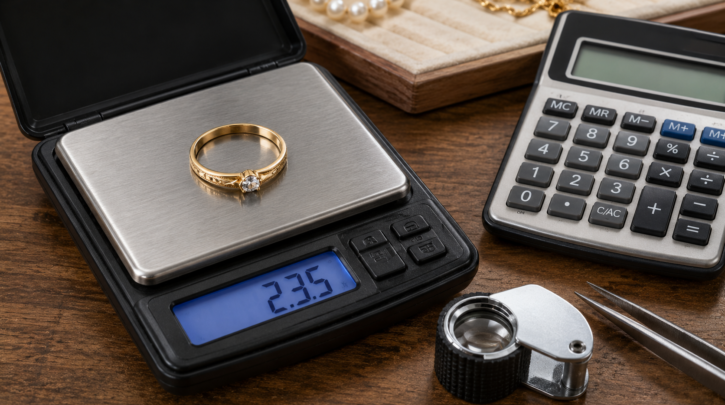

“14K” isn’t a value — it’s shorthand for a fraction. Specifically, 14K gold is 58.3% pure gold by weight, and that fraction, not the karat number itself, is what actually converts into melt value against the spot price. The second thing most people miss: the gross weight stamped or measured on a piece often isn’t all gold at all. Stone settings, prongs, and solder joints add weight that a scrap buyer has no reason to pay gold prices for, and skipping that deduction is one of the most common reasons a seller’s own math comes in higher than any dealer’s offer.
Karat Is a Purity Fraction, Not a Price
Every karat marking translates directly to a percentage of pure gold by weight, and it’s that percentage — not the karat number on its own — that does the actual work in a melt value calculation.
| Karat | Purity |
|---|---|
| 24K | 1.000 (100% pure) |
| 22K | 0.917 (91.7%) |
| 18K | 0.750 (75%) |
| 14K | 0.583 (58.3%) |
| 10K | 0.417 (41.7%) |
Two rings of identical weight, one 14K and one 18K, do not carry proportionally different value just because “18” is a bigger number than “14” — the 18K ring carries 75% pure gold against the 14K ring’s 58.3%, a difference of about 29% more actual gold content, which is the number that belongs in the formula below.
The Basic Formula
Melt value equals a piece’s actual gold weight, multiplied by its karat purity as a decimal fraction, multiplied by the current gold spot price per troy ounce — three numbers multiplied together, with accuracy in each one mattering for the final result.
Troy Ounces vs. Standard Ounces
Precious metals are priced in troy ounces, which are heavier than the standard avoirdupois ounces used for everyday weight — roughly 31.1 grams versus about 28.35 grams. Using a general household scale that measures in regular ounces without converting to troy ounces produces a genuinely incorrect melt value. If your scale reads in grams, divide the total by 31.1035 to convert to troy ounces before applying the rest of the formula.
Gross Weight Isn’t All Gold
A ring or bracelet’s total weight on a scale includes everything physically attached to it — the gold itself, but also any set stones, the prongs or bezel holding them, and any solder used in construction or repair. None of that non-gold material carries melt value, which is exactly why a stamped or measured gross weight overstates the actual gold content on any stone-set piece. A refiner or scrap buyer routinely deducts an estimated stone and mounting weight before calculating an offer, and doing that same subtraction yourself before approaching a buyer keeps your own expectations realistic. See our gemstone identification guide for how stone value gets assessed separately from the metal it sits in.
Worked Example
Take a 14K ring with a small set stone, weighed at 6.2 grams gross on a gram scale.
- Estimate the non-gold weight. The stone and its mounting are estimated at roughly 0.4 grams based on the stone’s visible size — a jeweler or refiner would typically estimate this the same way rather than removing the stone to weigh it separately.
- Net gold weight: 6.2g − 0.4g = 5.8 grams of actual gold.
- Convert to troy ounces: 5.8 ÷ 31.1035 = 0.1865 troy ounces.
- Apply karat purity: 0.1865 × 0.583 (14K) = 0.1087 troy ounces of pure gold.
- Apply spot price: at an example spot price of $2,400 per troy ounce, 0.1087 × $2,400 = roughly $261 in calculated melt value.
That $261 figure is the calculated melt value of the gold alone — not necessarily what a dealer will offer, and not counting whatever the stone itself might be worth if it’s genuine. It’s a starting number for a conversation, not a guaranteed payout.
Gemstones Need Their Own Separate Valuation
Gold jewelry very often includes set gemstones, and those stones carry their own value entirely separate from the surrounding gold’s melt weight — a gold ring’s melt calculation should account only for the metal itself, with any genuine stones assessed independently through the same gemstone identification process referenced above.
Gold-Filled and Gold-Plated Have Minimal Melt Value
Gold-filled pieces contain a modest but real amount of gold and carry some correspondingly modest melt value, while gold-plated pieces contain far too little actual gold to carry meaningful melt value at all. See our gold marks guide for how to distinguish these categories from solid gold before running any melt calculation — this formula only applies once you’ve confirmed a piece is actually solid karat gold.
Checking Current Spot Price
Gold spot price genuinely fluctuates daily along with broader commodity markets, so checking a live, current source before calculating melt value gives a far more accurate figure than relying on a remembered price from even a few weeks earlier.
Dealers Pay Below Full Spot-Price Value
Precious metal dealers and refiners typically pay somewhat below the full calculated melt value, reflecting their own business margin and refining costs — worth setting realistic expectations rather than assuming a dealer will pay the exact figure your own math produces.
Where to Sell for Melt Value
Local coin and precious metal dealers, along with dedicated refiners, are the standard channels for selling gold specifically for its melt value, distinct from the collector and design-focused buyers who purchase jewelry intact. See our melt vs. sell guide for how to decide which path actually makes more sense for a specific piece.
Getting Multiple Quotes
Melt value offers can vary somewhat between different dealers depending on their specific margin and current buying practices, so getting quotes from more than one buyer before committing to a sale helps confirm you’re getting a genuinely fair price rather than the first offer that happens to come along.
Weighing Before You Commit to Selling
Running your own weight-based melt value calculation, deductions included, before approaching a dealer gives you a realistic expectation going into the conversation, making it much easier to recognize whether an offered price is reasonably close to fair or noticeably below what the math actually supports.
Gold Weight Varies by Piece Type
A substantial ring or bracelet naturally contains more gold than a delicate chain or a thin band, and mixed pieces of different sizes and styles are worth weighing individually rather than estimating a single average value across an entire assorted collection. This piece-by-piece precision matters more the larger and more mixed a collection is.