

Despite having no melt value at all, top-tier vintage costume jewelry can command genuinely serious money — understanding what makes these specific pieces exceptional helps calibrate expectations for everything else in a collection.
Miriam Haskell’s Hand-Wired Construction
Miriam Haskell pieces are prized specifically for their labor-intensive, hand-wired construction — individual components wired together by hand rather than mass-produced with simpler mechanical assembly — a genuine craftsmanship distinction that sets Haskell apart from most other costume jewelry of the same era.
Trifari’s Jelly Belly Figurals
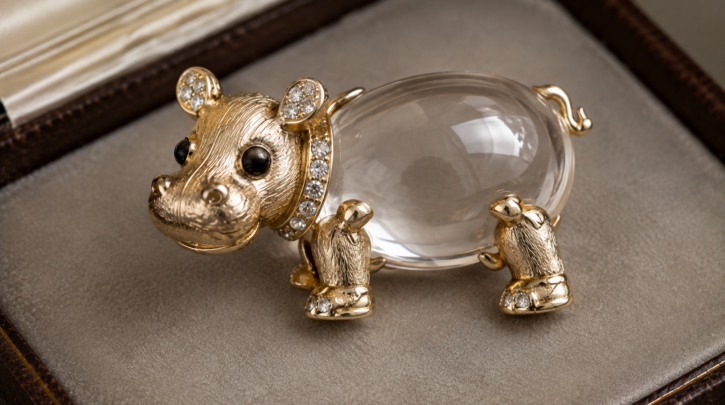
Trifari’s “Jelly Belly” pieces, figural brooches from the 1930s and 1940s using a clear lucite “belly” as the body of an animal or figure, are among the most famous and sought-after rarities in the entire costume jewelry hobby — genuinely scarce, instantly recognizable, and consistently commanding strong prices when a confirmed genuine example surfaces.
Eisenberg’s Oversized Rhinestones
Eisenberg built its reputation on exceptionally large, high-quality rhinestones set with real attention to faceting and sparkle, producing pieces genuinely prized for the sheer visual impact and quality of the stonework itself, independent of the base metal underneath.
What Drives Value Beyond These Specific Examples
Design complexity and artistry, hand-craftsmanship versus simple mass production, rarity of a specific design or line, and confirmed signed status all push value upward across the hobby generally, not just for these three headline names; see our value guide for the full framework these specific examples fit into.
Condition Matters Enormously
Missing rhinestones, tarnished or corroded pot metal, and discolored or cracked enamel all meaningfully reduce value even on a piece from a top-tier maker — condition assessment matters just as much in costume jewelry as it does in any other collectible category.
Most Vintage Costume Jewelry Isn’t Especially Valuable
It’s worth being honest: the vast majority of vintage costume jewelry, even genuinely old and well-made pieces, carries modest value — these headline examples represent real exceptions rather than a typical outcome, and assuming every old rhinestone brooch is a hidden treasure leads to disappointment more often than not.
Distinguishing Genuine Rarity From Ordinary Age
Confirming a signature, comparing a piece against documented examples of genuinely rare lines like Jelly Bellies, and checking recent completed sales for comparable pieces separates real rarity from simple age — age alone has never been what makes costume jewelry valuable.
Where These Pieces Turn Up
Genuine rarities surface through the same channels as any other vintage jewelry — estate sales, specialty dealers, and online marketplaces — though patient, ongoing searching matters more than expecting to find one on any single trip, given how genuinely scarce the top examples are.
The Thrill of the Hunt
Part of what keeps experienced costume jewelry collectors coming back to estate sales and flea markets is the genuine possibility, however statistically unlikely on any given day, of finding a confirmed Jelly Belly or a genuine early Haskell piece mixed in with a box of otherwise ordinary vintage jewelry.
A Realistic Expectation
Most collectors, even those active in the hobby for years, never personally stumble across one of these headline rarities by pure chance — the majority acquire them, if at all, through deliberate purchases from specialist dealers specifically because a confirmed example is being offered, rather than by accident at a random sale.
That said, the possibility is real enough to keep the hunt genuinely exciting for anyone who enjoys the process, and even a modest collection can include a genuinely wonderful piece or two acquired over years of patient looking.
Building Toward Confident Rarity Recognition
Recognizing a genuine rarity confidently, rather than hoping a common piece might be something special, comes from the same patient identification skill-building covered throughout this site — the more familiar you are with ordinary pieces, the more a genuine rarity will actually stand out.
That patient, comparative approach is a genuinely rewarding skill in its own right, independent of whether it ever turns up a headline-level rarity.