
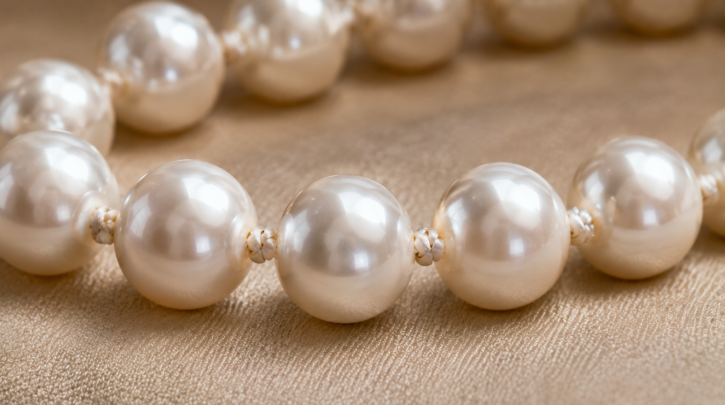

Pearl necklaces need a specific kind of maintenance most other jewelry doesn’t: periodic restringing, a genuine consequence of the traditional silk-thread construction used to string pearls together.
Why Silk Thread Wears Out
Traditional pearl stringing uses silk thread, which stretches gradually and can weaken or degrade over years of wear — exposure to natural skin oils, perspiration, and simple repeated flexing all contribute to this gradual wear, making eventual restringing a normal, expected part of pearl ownership rather than a sign anything went wrong.
Signs a Strand Needs Restringing
- Visible gaps where pearls slide loosely along the strand instead of sitting snugly together
- Fraying or visibly worn thread between the pearls
- Discoloration of the thread, especially yellowing
- Knots that have loosened or shifted out of position
Why Pearls Are Individually Knotted
Traditional pearl necklaces have a small knot tied between each individual pearl, serving two genuinely practical purposes: the knots prevent pearls from rubbing directly against each other, which can cause surface wear over time since pearls are a relatively soft material, and if the strand ever breaks, the knots mean only one pearl is likely to be lost rather than the entire necklace scattering.
This Is a Job for a Professional
Restringing is generally best left to a professional jeweler or a specialist pearl-stringing service rather than attempted as a DIY project, given how easy it is to damage pearls or get knot tension and spacing wrong in a way that undermines both the necklace’s appearance and the protective function of proper knotting.
How Often Restringing Is Needed
There’s no single universal timeline — pearls worn regularly need restringing more often than pieces kept mostly in storage, and actual frequency depends heavily on individual wear patterns. Checking periodically for the warning signs above is a more reliable guide than following any fixed schedule.
This Applies Mainly to Genuine and Quality Faux Pearls
The knotted-silk restringing need applies primarily to genuine pearls and higher-quality faux pearls strung using the same traditional technique — some costume faux pearls are constructed differently, such as strung on wire, and may not follow the same restringing timeline or technique at all, so it’s worth confirming construction type before assuming every pearl-look necklace needs the same care.
Caring for Pearls Between Restringing
Beyond restringing, pearls need genuinely gentle everyday care — wiping with a soft cloth after wearing and avoiding contact with perfume, hairspray, and harsh chemicals protects both the pearls themselves and the thread holding them together; see our cleaning guide for the full range of material-specific care this site covers.
Putting Pearls On Last, Taking Them Off First
A genuinely simple habit that protects pearls meaningfully over time: apply perfume, hairspray, and lotion before putting pearls on rather than after, and remove pearls before activities likely to expose them to chemicals or heavy perspiration, since prevention matters more than any cleaning method after the fact.
Vintage Pearls Deserve Extra Attention
A genuinely old strand of pearls, whether inherited or purchased, is more likely to be overdue for restringing than a newer one, simply given how much more time the thread has had to weaken — worth having an unfamiliar vintage strand checked by a professional before wearing it regularly, even if it looks fine at a casual glance.
Restringing Costs Are Generally Modest
Compared to many other jewelry repairs, professional pearl restringing is generally a modest expense relative to the value and longevity it restores — a genuinely reasonable investment for a strand you actually wear, rather than something to put off indefinitely out of cost concerns.
A Habit Worth Building Early
Getting into the habit of a quick visual and tactile check of any pearl strand before wearing it — feeling for gaps, checking knot positions — takes only a moment and catches problems while they’re still minor and inexpensive to address.