
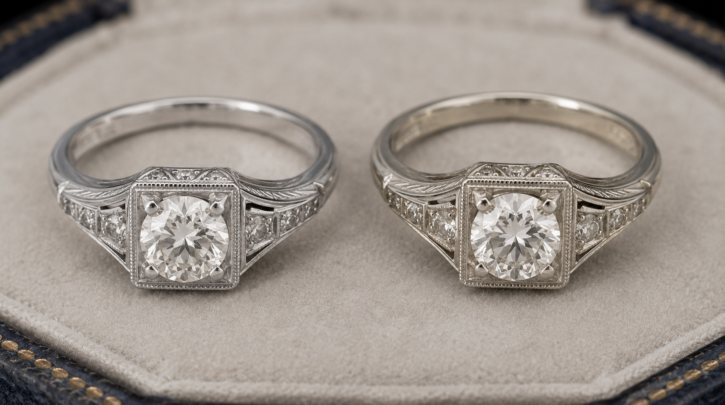

Platinum and white gold look similar enough to the untrained eye that they’re genuinely easy to confuse, but they’re fundamentally different metals with different marks, different weight, and different long-term care requirements.
What White Gold Actually Is
White gold is actually gold — naturally yellow — alloyed with white metals like nickel, palladium, or silver to shift its color toward silvery-white, then typically finished with a thin rhodium plating layer for extra brightness and durability. Despite looking silvery, white gold is marked with a standard karat number just like yellow gold, since it’s genuinely gold underneath.
What Platinum Actually Is
Platinum is a completely different precious metal from gold entirely — rarer, denser, and naturally white without needing any plating to achieve that color. Platinum jewelry is typically marked “PLAT,” “950,” or “900,” reflecting its own purity standards rather than the karat system used for gold.
The Weight Difference Is Real and Noticeable
Platinum is significantly denser than white gold, which means a platinum piece feels noticeably heavier than a white gold piece of the same size and design — a genuinely useful hands-on comparison once you’ve held confirmed examples of each.
Checking the Mark
The mark is the most reliable single test: a karat number (10K, 14K, 18K) confirms white gold, while “PLAT,” “950,” or “900” confirms platinum — worth checking directly rather than assuming based on color or appearance alone, since both metals can look essentially identical when new and well-polished.
Why Rhodium Plating Matters for White Gold
White gold’s bright white finish comes substantially from its rhodium plating layer, which wears thin over years of regular wear, gradually revealing the slightly warmer, more yellowish tone of the gold alloy underneath — a genuinely normal maintenance issue that professional jewelers address with periodic re-plating rather than a sign anything is wrong with the piece.
Platinum Doesn’t Need Rhodium Plating
Because platinum is naturally white, it doesn’t require rhodium plating to maintain its color the way white gold does — platinum can develop a soft matte patina with wear over time, which some owners polish away and others specifically prefer to leave, since that patina is a well-known, natural characteristic of the metal rather than damage.
Value Differences
Platinum is generally rarer and more expensive than gold by weight, which means confirming platinum versus white gold has real financial stakes beyond just satisfying curiosity; see our jewelry value guide for how metal identification feeds into an overall value assessment.
When in Doubt, Get It Weighed and Tested
For a piece where the mark is worn, missing, or genuinely ambiguous, a jeweler can test the metal directly and provide a confident answer — worth doing before assuming either metal based on appearance alone, given how much the value gap between the two can matter.
Platinum Settings on Vintage Pieces
Because platinum is strong and holds gemstones securely, it was a popular choice for fine antique and vintage ring settings, particularly during the Art Deco era — worth keeping in mind that an older piece with a delicate, detailed metal setting holding a genuinely fine stone has a real chance of being platinum rather than white gold, given how the material suited that kind of intricate work especially well.
A Simple Comparison Worth Doing
Holding a confirmed platinum piece and a confirmed white gold piece of similar size side by side, even briefly at a jewelry counter, builds a genuinely useful physical memory of the weight difference that no written description can fully substitute for.
Both Metals Have Genuine Appeal
Neither metal is objectively superior — platinum’s durability and hypoallergenic properties suit some wearers and settings better, while white gold’s lower cost and lighter weight suit others, and understanding both fairly matters more than assuming one is always the better choice.
Knowing which one you’re actually holding is what makes an informed decision possible in the first place.