

Real gold and well-made costume jewelry can look nearly identical at a glance, but the value difference between them is enormous — and reliably telling them apart starts with understanding what each actually is, not just what they look like.
What Real Gold Jewelry Actually Is
Genuine gold jewelry is made from an alloy containing a documented, marked percentage of actual gold, which means it carries real intrinsic value tied directly to the current price of gold as a commodity — melt a genuine gold piece down, and you get real, valuable gold.
What Costume Jewelry Actually Is
Costume jewelry uses base metals — brass, pot metal, or similar alloys — often plated with a thin layer of gold or silver-colored finish purely for appearance, with little to no meaningful precious metal content and essentially no melt value, regardless of how convincing the finish looks when new.
The Mark Is the Most Reliable Test
A genuine karat mark — 10K, 14K, 18K, or a numeric equivalent like 585 or 750 — reliably confirms real gold, while costume jewelry typically carries no metal purity mark at all, or sometimes a maker’s mark with no purity claim whatsoever; see our gold marks guide for the full range of markings you’ll actually encounter.
The Magnet Test
Most costume jewelry base metals, and genuine gold itself, aren’t strongly magnetic, so a magnet test mainly helps rule out certain magnetic base metals used in some cheaper costume pieces — useful as one supporting check, but not a complete test on its own, since plenty of non-magnetic base metals exist too.
Weight and Density
Genuine gold is a notably dense metal, and a piece that feels surprisingly light for its size is worth extra scrutiny — though weight alone isn’t fully definitive, since gold-filled and heavier costume pieces can sometimes feel closer to solid gold’s heft than expected.
Checking for Wear-Through
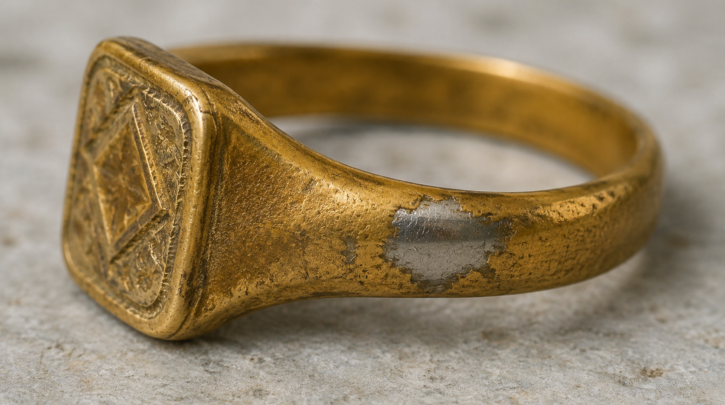
Gold-plated costume jewelry can wear through to a different-colored base metal at high-contact points over years of use — a distinctive tell that only happens to plated pieces, since genuine solid gold has no thin surface layer to wear through.
Why This Distinction Matters So Much
Because real gold carries genuine commodity-tied value and costume jewelry generally doesn’t, confusing the two — in either direction — leads directly to either underselling a genuinely valuable piece or overpaying for one that isn’t; see our costume vs. fine jewelry value guide for what actually does drive value in costume pieces, since design and maker still matter even without melt value in play.
Practice the Core Checks
Our free 5-Second Real Gold vs. Costume Jewelry Checklist walks through these exact detection principles in a format built to actually use while you’re holding a piece.
When the Mark Is Worn or Missing
For a piece with a worn, illegible, or entirely absent mark, combining the wear-through check, weight impression, and comparison against known genuine and costume examples gives the most reliable read available — though a genuinely uncertain piece may be worth a professional opinion before making any decision based on assumed gold content.
Costume Jewelry Isn’t Automatically Worthless
Even without any metal value at all, well-made costume jewelry from recognized designers can command genuine collector prices well above what a random unmarked piece would fetch — worth remembering before assuming “not gold” means “not valuable”; see our most valuable costume jewelry guide for real examples of this pattern.
A Habit Worth Building
Checking every unfamiliar piece’s mark before assuming anything about its composition, rather than guessing based on color or shine alone, is the single habit most likely to prevent both underselling a genuine gold find and overpaying for a well-disguised costume piece.
A Note on Gold Testing Kits
Home gold testing kits, using acid solutions and a touchstone, are genuinely available for personal use, though they require careful handling of mildly corrosive chemicals and some practice to read results confidently — for a single valuable piece, professional testing at a jeweler is generally the more practical choice over buying and learning a home kit.
For everyday collecting decisions, the mark, weight, and wear checks covered here handle the vast majority of situations without needing chemical testing at all.