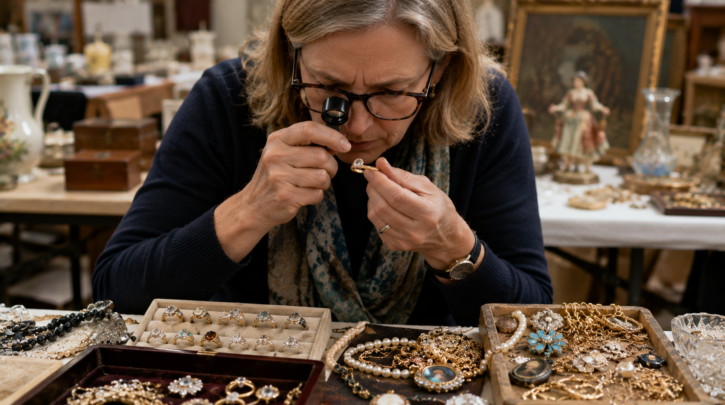

Gold-filled and gold-plated pieces get passed off as solid gold more often than buyers expect — sometimes through a seller’s honest mistake, sometimes not. The stamp inside the band or on the clasp settles the question every time, but it’s small, and reading it correctly usually takes a loupe. That single fact — whether a venue lets you check the stamp in hand before you buy, or only shows you a photo that may not even include it — is the real difference between where you buy vintage jewelry, more than price or selection.
The Verification Gap: Why It Matters More Than Price
A GF, GP, or HGE stamp means gold-filled or gold-plated — a thin layer over a base metal core, worth little to nothing for its metal content. A 10K, 14K, or 18K stamp means solid gold all the way through. The two can look identical from across a table, and the difference lives entirely in a stamp a few millimeters wide, usually worn faint by decades of wear.
Our gold marks and hallmarks guide covers where to find it and how to read it correctly under magnification; our gold fakes and alterations guide covers the ways a stamp itself can be altered or misleading. Venue choice matters because it determines whether you can run that check yourself before money changes hands, or whether you’re relying entirely on someone else’s description.
Venues Where You Can Verify In Hand
Estate sales often offer the best original pricing and a real chance at underpriced gold or gemstones, since pricing is frequently set by someone without deep jewelry knowledge — genuine fine jewelry sometimes gets priced as though it were costume simply because no one checked the marks. Because you’re handling the piece directly, you can check that stamp yourself before the seller ever prices it correctly.
Antique malls and dealers specializing in vintage jewelry offer convenient browsing with clearly marked prices, generally running higher than estate sale pricing since they include dealer markup and expertise. The advantage isn’t just being able to ask a knowledgeable dealer questions — it’s that most will hand you the piece and a loupe without hesitation, and a dealer who won’t let you inspect the stamp closely is worth treating with caution.
In-person jewelry shows put dozens of sellers in one room and give you the same in-hand advantage as an estate sale, with the added benefit of being able to compare a questionable piece against several similar ones nearby before deciding.
Flea markets are a genuine mixed bag — occasional real bargains alongside occasional misidentified pieces sold as more valuable than they actually are, or the reverse. This is the venue where bringing your own verification tools matters most: a small magnet and a jeweler’s loupe let you check a stamp on the spot rather than trust a handwritten price tag. See our real gold vs. costume jewelry guide for the exact checks worth running before you buy.
Where the Verification Gap Costs You: Online Marketplaces
Online marketplaces offer by far the largest selection and the ability to search for specific makers directly, but you’re buying based on photos and a seller’s description rather than handling a piece yourself — and listing photos routinely skip the one detail that matters most. A wide shot of a ring or bracelet often never shows the inside band or clasp where the stamp actually lives. Before buying anything online with real value at stake, message the seller and ask specifically for a close-up photo of the stamp; a seller unwilling or unable to provide one is telling you something.
Browse current vintage jewelry listings: Search vintage jewelry on eBay
Auctions
Both in-person and online auctions can produce excellent prices for a patient bidder, or lead to overpaying in the excitement of active bidding. Higher-value lots sometimes include professional gemological descriptions or certificates — worth checking for specifically, since that documentation substitutes for the in-hand stamp check you’d otherwise want. Setting a firm maximum price before bidding begins is the single most useful discipline for auction buying, in person or online.
Specialty Vintage Jewelry Retailers
A retailer specializing specifically in vintage and antique jewelry offers curated selection and genuine expertise in dating and authenticating period pieces — their own reputation and return policy effectively stand in for the verification you’d otherwise do yourself, which is worth factoring in against the higher price these retailers typically charge.
Browse vintage and antique jewelry at Atique: Shop vintage jewelry at Atique
Collector Clubs and Costume Jewelry Societies
Dedicated collector communities connect buyers directly with knowledgeable sellers who specialize in specific makers or eras — often the best source for rare finds or expert opinions that rarely surface through general channels, and a good place to get a second opinion on a stamp or signature you’re unsure about. Our costume jewelry marks and signatures guide covers what to look for on the costume side specifically.
General Buying Tips
- Bring a small magnet and a jeweler’s loupe to any in-person venue for checking marks and stones closely on the spot
- Verify the mark before assuming any value, in either direction — a worn or missing stamp is not the same as no stamp ever existing
- For online purchases, ask the seller for a close-up photo of the stamp before buying, not after
- Ask whether any gemological documentation exists for a piece with a claimed significant gemstone
- Ask about return policies before buying anything expensive sight unseen, especially online
- Research a maker or design before a big purchase rather than trusting a seller’s description alone
Budgeting for the Hunt
Setting a rough budget before heading out to an estate sale or antique mall, and treating it as a genuine limit rather than a loose guideline, helps avoid the common pattern of overspending on impulse finds that don’t actually fit a collection’s focus.
Building Relationships With Dealers
A dealer who gets to know your specific collecting interests over repeated visits will often set aside pieces or offer a heads-up before something goes on the general sales floor. This kind of relationship takes time to build but can meaningfully improve access to good pieces over the long run — and a dealer who trusts you tends to be more generous with letting you inspect pieces closely before you decide.
Timing Your Shopping
Estate sales typically offer the best selection on the first day but often reduce prices on later days to clear remaining inventory — a genuine tradeoff between selection and price worth weighing based on whether you’re chasing something specific or open to whatever turns out to be a good value.
Neither approach is wrong — it depends entirely on whether you’re hunting for something specific or simply enjoying the process of seeing what turns up.