
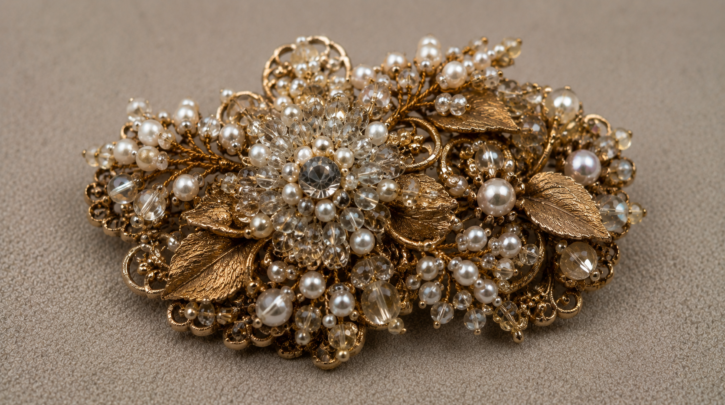

Miriam Haskell founded one of the few major female-led jewelry houses of her era, and the company’s reputation rests specifically on hand-wired construction techniques that set it apart from nearly every mass-production competitor of the same period.
Genuinely Hand-Wired Construction
Unlike most costume jewelry assembled with simpler mechanical processes, Haskell pieces used intricate, multi-layered designs built from seed pearls, glass beads, and filigree metal components wired together individually by hand — a genuinely labor-intensive approach that shows in the density and complexity of a finished piece; see our most valuable costume jewelry guide for why this construction style commands such strong collector respect.
Frank Hess: The Longtime Design Force
Frank Hess served as Haskell’s chief designer for decades, shaping the company’s distinctive aesthetic across a long and prolific design career — much like Alfred Philippe’s role at Trifari, Hess’s design sensibility is largely what collectors are responding to when they describe a piece as having a recognizably “Haskell look.”
The Signature Antiqued Finish
Haskell pieces are often recognizable by a distinctive antiqued, warm gold-tone finish on the metal findings and filigree work, giving pieces a soft, aged quality even when new — a genuinely identifiable house style worth learning to recognize on sight.
Early Pieces Were Genuinely Unsigned
Haskell didn’t sign her pieces in the company’s earliest years, meaning genuine early Haskell jewelry exists entirely without a mark, requiring the same kind of construction-based detective work needed for any unsigned piece from any maker; see our marks and signatures guide for how that research process works, since it applies especially directly to early Haskell pieces specifically.
Later Signed Pieces
Once Haskell began signing pieces, the company’s mark provides straightforward confirmation, though as with any long-running maker, comparing the specific signature style against documented examples can help narrow down roughly which era a signed piece belongs to.
Condition Considerations Specific to Haskell
Because Haskell construction relies so heavily on wired-together components, a piece with loose wiring, missing seed pearls, or detached filigree elements has lost genuine structural integrity, not just cosmetic polish — worth inspecting these specific construction points closely before purchase, since repair requires the same kind of hand skill the piece was originally built with.
Finding Miriam Haskell Pieces
Confirmed Haskell pieces, especially earlier unsigned examples, command real collector attention, so patient searching through reputable dealers and specialty auctions tends to produce better results than general browsing for a specifically targeted Haskell search.
Why Haskell Rewards Close Inspection
More than almost any other maker covered on this site, genuinely appreciating a Haskell piece means looking closely at the individual wired components rather than judging it from a quick glance across the room — the labor and detail that define the brand’s reputation are easy to miss without that closer look.
A Female-Led House in a Male-Dominated Industry
Miriam Haskell’s role as a founder and driving force behind a major jewelry house was genuinely unusual for her era, and that history adds a real layer of significance to the brand beyond its construction quality alone — worth knowing as part of the company’s broader story.
Repair Requires Real Specialized Skill
Because of how Haskell pieces are constructed, repairing loose or damaged wiring properly requires someone specifically experienced with this style of hand assembly rather than a general jewelry repair shop; see our repair guide for finding the right kind of specialist for this specific type of construction.
Assessing Value on an Unsigned Early Piece
For a genuinely old, unsigned piece suspected of being early Haskell, comparing construction technique, bead and pearl quality, and the characteristic antiqued finish against documented confirmed examples is the realistic path to a confident attribution, since no single shortcut replaces this kind of careful comparison.
That patient, comparative research approach — the reward of correctly placing an unsigned early Haskell piece — transfers directly to identifying unsigned pieces from other makers as well, building skill that compounds across the rest of a collecting career.