
Before picking a focus, setting a budget, or learning to date a piece by its clasp style, there’s one skill every new collector needs first: reading a karat stamp correctly. Most gold-colored vintage jewelry on the market today isn’t solid gold at all — it’s gold-filled, gold-plated, or vermeil, and a beginner who can’t tell those apart from the stamp will misjudge the price of nearly every piece they look at, in both directions. Everything else in this guide matters, but it matters less than getting this one skill down first.
Skill One: Learn to Read the Stamp
Three stamp patterns cover the vast majority of what you’ll encounter, and learning to recognize all three on sight is worth more to a new collector than any amount of era or maker knowledge in the beginning.
- GF, GP, HGE, or RGP — gold-filled or gold-plated. A thin layer of gold over a base metal core, with little to no melt value and a price that should reflect design and condition, not metal content.
- 10K, 14K, 18K — or 417, 585, 750 — solid gold. Real melt value on top of whatever design or maker value the piece carries.
- 925 stamped alongside a karat mark — vermeil, sterling silver with a gold layer over it. Genuinely valuable base metal, but a different value calculation than either of the above.
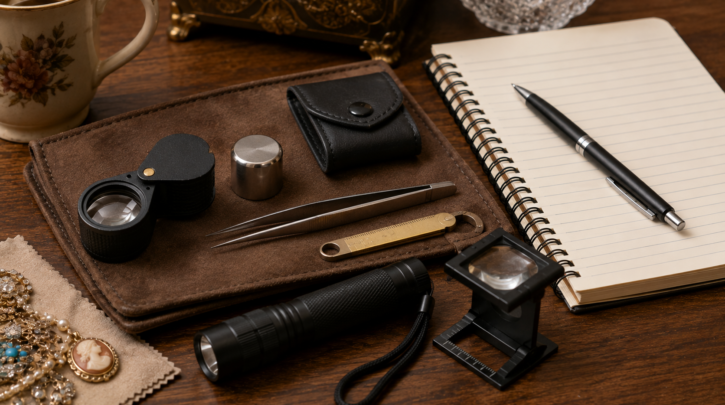
Our gold marks and hallmarks guide covers exactly where to find these stamps and how to read them under a loupe, and our real gold vs. costume jewelry guide walks through the full range of checks worth running on any piece before you factor its price into your budget.
Keep a Quick Reference Handy From Day One
Our free 5-Second Real Gold vs. Costume Jewelry Checklist gives new collectors a fast, practical starting reference for the single most important distinction in the hobby.
Why This Comes Before Everything Else
The same-looking gold bracelet can be worth wildly different amounts depending purely on what that stamp says — a few dollars in melt value if it’s gold-filled, a real multiple of that if it’s solid 14K, and something in between if it’s vermeil. A new collector who can’t read the difference is essentially pricing blind, at risk of overpaying for gold-filled pieces priced as though they were solid, or walking past genuinely underpriced solid gold because it looked no different from the costume piece next to it. See our jewelry value guide for how stamp, maker, and condition combine into an actual price once you can read all three.
Then Pick a Focus
Vintage jewelry is broad enough that deciding on a focus — a single maker, a material category like sterling or costume, a specific era such as Art Deco, or a specific piece type like brooches or rings — gives a new collection real direction. Trying to collect everything at once tends to dilute both budget and identification skill. See our jewelry makers and designers guides across this site for maker-based focus ideas.
Start With Common, Affordable Pieces
Common mainline pieces from any major maker are widely available, inexpensive, and forgiving to learn on. Building genuine identification confidence on lower-stakes pieces makes it much easier to recognize something genuinely unusual later, rather than risking a big purchase before your own eye — and your stamp-reading — is ready for it.
Build Handling Experience Before Big Purchases
Handling genuine pieces regularly — at shows, shops, or through a collector club — teaches the tactile and visual differences that separate confident identification from guesswork far more effectively than reading alone. See our general identification guide for the core framework worth practicing on every new piece, stamp check included.
Learn Basic Care Before Attempting Anything Risky
Understanding material-specific cleaning and storage before working on a piece that might carry real value protects against irreversible mistakes. See our cleaning guide and storage guide for the fundamentals worth learning early.
Set a Realistic Budget
Deciding on a rough spending limit before heading to an estate sale or antique mall, and treating it as a genuine boundary rather than a loose guideline, helps avoid overspending on impulse finds that don’t actually fit your chosen focus — and a budget only works if you can actually read the stamps well enough to know what you’re spending it on.
Connect With the Collector Community
Dedicated collector clubs and online communities offer identification help, trading opportunities, and access to reference material far deeper than any single overview can responsibly provide — genuinely valuable connections for any new collector willing to ask questions and share finds, including questions about a stamp you’re not sure how to read.
Consider Collecting Matched Sets
Some collectors specifically pursue parures — matched sets of coordinated pieces such as a necklace, earrings, and bracelet sharing the same design — as their own dedicated focus, given how much rarer a genuinely complete matched set is compared to individual pieces. See our value guide for how matched sets factor into overall worth.
Know Where to Buy
Estate sales, antique malls, online marketplaces, and specialty retailers each offer a different mix of price, selection, and risk. See our buying guide for what to expect across these different sourcing options, and which ones let you check a stamp in hand before you buy.
Enjoy the Process
Whether the eventual goal is a display collection, pieces to actually wear, or both at once, vintage jewelry rewards patient, curious collecting more than rushing toward a specific outcome — the learning itself is a genuine part of what makes this hobby worthwhile.
A Realistic First-Year Timeline
Most new collectors spend their first several months mostly handling and identifying common pieces — reading stamps until it’s second nature — before making a first genuinely significant purchase. There’s no rush, and moving at this pace consistently produces more satisfied, knowledgeable collectors than trying to assemble an impressive collection quickly.
It’s Fine to Change Focus Over Time
Many collectors start with one maker or material and gradually shift interest as they learn more about the broader hobby. Starting with costume jewelry and later adding fine pieces, or beginning with a single maker and later broadening out, are both common and perfectly reasonable paths rather than a sign of an unfocused start.
Learning From Mistakes
An early misidentification, an overpaid purchase, or a cleaning attempt that didn’t go quite as planned are all genuinely normal parts of learning this hobby — nearly every experienced collector has a story about misreading a stamp early on, and looking back on those moments with humor rather than embarrassment is part of what makes the learning process enjoyable rather than stressful.
Give yourself the same grace you’d extend to any beginner in a genuinely deep hobby — the expertise comes with time.