
Sterling silver jewelry uses the same core purity standard and marks as sterling tableware, but jewelry brings its own maker’s mark conventions and a few jewelry-specific complications worth understanding separately.
The Same 92.5% Standard
Sterling silver jewelry is 92.5% pure silver, marked “STERLING” or “925” just like sterling tableware, confirming genuine silver content that carries real melt value tied to the silver market.
Maker’s and Designer’s Marks
Fine silver jewelry frequently carries a separate maker’s or designer’s mark alongside the sterling designation, and identifying that mark can meaningfully add to a piece’s value beyond its silver content alone, particularly for well-regarded studio jewelers and recognized design houses.
Silver-Plated Jewelry
Just as with tableware, silver jewelry can be plated rather than solid, typically marked “EPNS” or similar plate-specific terms rather than “STERLING” or “925” — worth checking carefully, since silver-colored jewelry isn’t automatically sterling.
Vermeil: Silver With Gold on Top
Vermeil pieces are sterling silver with a gold plating layer, which means they carry genuine sterling silver value underneath the gold-colored surface, distinct from either plain gold-plated base metal or solid gold; see our gold marks guide for how vermeil fits alongside other gold-related terminology.
Oxidized and Antiqued Silver
Some sterling silver jewelry is intentionally oxidized or antiqued, darkening recessed areas to highlight design detail — this is a deliberate design choice rather than tarnish or damage, and cleaning it aggressively can remove an intentional finish the designer meant to be there; see our cleaning guide for how to avoid this specific mistake.
International Silver Marks
Silver jewelry made outside the United States sometimes carries different purity marks or full hallmark systems similar to what’s used for fine silver tableware internationally — worth researching a specific unusual mark against a dedicated silver reference rather than assuming every silver piece follows the simple American “STERLING” convention.
Checking for Fake or Altered Marks
Because sterling carries real value, fake or added “STERLING” stamps on plated or base metal jewelry are a genuine concern, following the same general detection principles that apply to gold; see our fakes and alterations guide for how these authentication checks work across precious metals generally.
Silver Jewelry Value Beyond the Metal
As with sterling tableware, popular designers and well-regarded patterns can push a piece’s value well above simple silver melt value, so identifying the maker matters just as much as confirming the metal; see our value guide for how these factors combine across every category on this site.
Native American and Southwestern Silver Marks
Silver jewelry from Native American and Southwestern makers often carries its own distinct marking traditions alongside or instead of a simple sterling stamp, including individual artist hallmarks that carry real significance within that specific collecting tradition — worth researching separately rather than assuming general sterling marking conventions apply identically across every regional jewelry tradition.
Building Confidence With Silver Marks
Handling and comparing several confirmed genuine sterling pieces alongside plated ones builds a real feel for the subtle weight and mark differences that separate the two, a skill that develops with repeated practice rather than something learned from a single reading of any guide.
Jewelry Marks Are Often Smaller and Less Legible
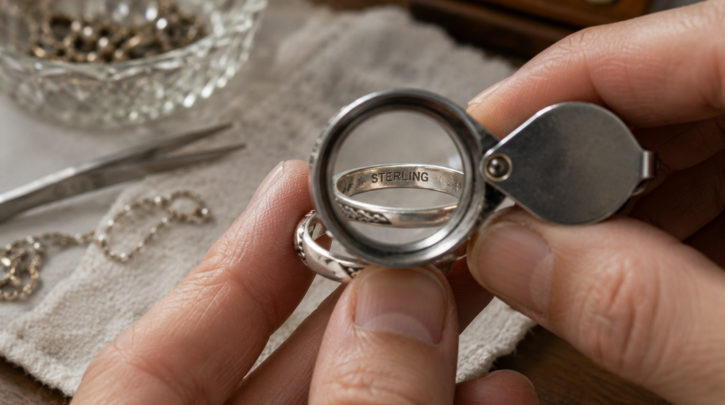
Because jewelry pieces are generally smaller than flat tableware handles, marks squeezed onto a ring’s interior band or a pendant’s small back surface are often correspondingly tiny — a jeweler’s loupe or a strong magnifying glass genuinely helps read these marks accurately rather than guessing at worn or cramped lettering with the naked eye.
A Consistent Checking Habit
Making mark-checking with proper magnification a routine first step for every unfamiliar silver piece, rather than an occasional afterthought, catches far more genuine finds and far fewer costly misidentifications over the course of building a collection.
Small, repeated habits like this one are what separate a confident, experienced buyer from someone still learning the ropes.