

A counterfeit karat stamp gets most of the attention in gold-buying warnings, but it’s not actually the most common way buyers get misled. Far more often, the stamp itself is completely genuine — it’s the description around it that’s wrong. A piece stamped GF, GP, or 925-plus-karat is telling the truth; it’s the listing calling it plain “gold” that isn’t.
The second common pattern is just as easy to miss: a genuinely old, genuinely gold setting that’s had its original stone quietly swapped for a synthetic or lower-grade one. Both patterns pass a casual glance. Neither requires a forger — just a seller, honest or not, who didn’t read the stamp fully or didn’t mention what’s actually set into the piece.
Pattern One: An Accurate Stamp, Sold as Something It Isn’t
GF (gold-filled), GP (gold-plated), HGE (heavy gold electroplate), and RGP (rolled gold plate) are all legitimate, standard markings — they’re not fakes, and pieces carrying them aren’t misrepresented by the stamp itself. The misrepresentation happens one step later, when that same piece gets listed or described simply as “gold jewelry” with the qualifying letters left out, whether from a seller’s carelessness or deliberate omission. A 925 stamp paired with a karat mark carries the same risk in the other direction — it means vermeil, sterling silver with a gold layer, and dropping either half of that mark in a description quietly overstates what the piece actually is. See our gold marks and hallmarks guide for how to read every qualifier correctly, and our real gold vs. costume jewelry guide for the full range of checks worth running before trusting a description at face value.
Pattern Two: The Stone Swap in a Genuine Setting
The gold or platinum setting on a piece can be entirely genuine and period-correct while the stone sitting in it has been replaced at some point with a synthetic, glass, or simply lower-grade substitute. This isn’t a flaw in the metal at all — it’s a swap that happened after the piece was made, and it’s why verifying the setting’s authenticity and the stone’s authenticity are genuinely two separate checks, not one. Look closely at the prongs for solder marks, slightly mismatched metal color, or tool marks that suggest the setting has been reworked to accommodate a different stone than the one it was originally cut for. See our gemstone identification guide for how to evaluate what’s actually seated in the setting.
Triage: Magnet, Loupe, Acid Test
Three simple checks catch the overwhelming majority of both patterns, run roughly in this order.
- Magnet: Genuine gold isn’t magnetic, so a strong pull toward a magnet rules a piece out immediately. But this test only catches base-metal fakes — gold-filled and gold-plated pieces are usually built over brass, which also isn’t magnetic, so passing the magnet test proves nothing about whether a piece is solid gold versus plated.
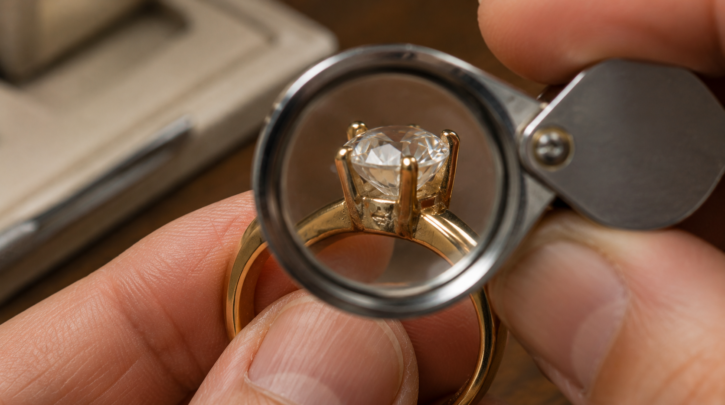
- Loupe: This is where pattern one and pattern two actually get caught. Read the full stamp under magnification, including every qualifying letter — GF, GP, HGE, or a 925-plus-karat combination changes the piece’s identity entirely and is easy to miss with the naked eye. While you’re already at magnification, check any set stone for wear patterns and inclusions consistent with the piece’s claimed age, and check the prongs for the solder marks or tool marks that indicate a reset.
- Acid test or electronic tester: When the stamp is worn illegible, missing, or you simply want a second confirmation beyond what a loupe can settle, acid testing and electronic gold testers give jewelers and pawn shops a definitive read on karat purity — a modest, worthwhile cost for any purchase where the price assumes confirmed gold content at meaningful weight.
Fake Karat Stamps Still Happen — Here’s the Tell
Actual counterfeit stamps — a karat mark added to base metal, gold-plated, or lower-karat gold to justify a higher price — are less common than the two patterns above, but worth knowing how to spot. A genuine factory stamp shows consistent depth and clean, uniform lettering matching known genuine examples. A mark added later, by contrast, often shows inconsistent depth, visible tool marks, or a texture mismatch with the surrounding metal under close inspection.
Weight Discrepancies
A piece claiming to be solid gold but feeling noticeably light for its size, compared to verified genuine examples of similar dimensions, is worth extra scrutiny — though weight alone isn’t definitive, since genuine variation exists between karat levels and specific designs.
Being Skeptical of Too-Good-to-Be-True Prices
Gold jewelry priced dramatically below what its weight and marked karat would suggest deserves real scrutiny before purchase — either the seller is unaware of genuine value and offering a real bargain, or something about the claimed gold content or the set stones doesn’t hold up, and it’s worth confirming which before assuming the former.
Run the Quick Checks Before You Buy
Our free checklist covers the fastest gold authentication tells, sized to actually use while you’re examining a piece before a purchase.
Buying From Reputable Sources
Buying from established dealers with a track record in fine jewelry specifically, or from sellers active in dedicated collector communities, meaningfully reduces risk compared to an anonymous listing with no reputation history behind it, particularly for a significant purchase.
When in Doubt, Get a Second Opinion
For any purchase where the price assumes genuine gold content at meaningful weight, or a stone’s authenticity meaningfully affects the price, getting a second opinion from an experienced jeweler or a professional appraisal before committing is worth the extra effort — the cost of verification is almost always smaller than the cost of being wrong.
Building a Personal Reference
Photographing verified genuine marks, weights, and settings you’ve handled or purchased builds a personal reference that becomes genuinely useful whenever a new piece raises a question — the same approach that pays off across every collectible category covered on this site.
A Final Word on Due Diligence
None of these individual checks is foolproof on its own, but running through the stamp’s full qualifier, the stone’s consistency with the setting, weight, and overall wear patterns together on any purchase where gold content or a claimed stone meaningfully affects price catches the overwhelming majority of misrepresented pieces before any money changes hands.
Trusting the Process as You Learn
It’s normal to feel uncertain early on, especially given how much money can be at stake with gold — that uncertainty fades with repeated practice examining genuine marks and pieces, and staying appropriately careful is simply part of collecting responsibly rather than a sign anything is wrong with your approach.