

“Real” versus “fake” gemstones is actually three genuinely different categories, not two — natural stones formed by geology, lab-created stones that are chemically identical to natural ones but grown artificially, and simulants that merely look similar with no real chemical relationship at all.
Natural Gemstones
Natural gemstones formed underground over geological time and were mined, cut, and set — their rarity and formation history are what typically make them the most valuable of the three categories, all else being equal.
Lab-Created Gemstones Are Genuinely Real Stones
Lab-created, or synthetic, gemstones share the same chemical composition and physical properties as their natural counterparts — they’re genuinely the same mineral, just grown in a controlled lab environment rather than formed underground over millions of years. This is a meaningfully different category from a pure imitation, even though lab-created stones are generally worth far less than natural ones due to their far greater availability.
Simulants: Look-Alikes With No Real Relationship
Simulants — glass “paste,” cubic zirconia, and other imitation materials — merely resemble a genuine gemstone visually, with no shared chemical composition at all. This is the category most people mean when they say “fake,” and it’s genuinely different from both natural and lab-created stones.
The Fog Test
Breathing on a stone and watching how quickly the fog clears is a commonly cited home test — genuine diamonds disperse heat quickly and clear almost instantly, while glass and many simulants hold the fog noticeably longer. This test offers a real supporting clue but isn’t fully reliable on its own, since some other genuine stones and even some simulants can produce ambiguous results.
The Scratch Test and Relative Hardness
Genuine diamonds can scratch glass, and corundum (sapphire and ruby) is also quite hard, following the Mohs hardness scale — but a scratch test risks damaging a piece and isn’t a practical or recommended method for checking a piece you actually care about, useful mainly as background knowledge for understanding why certain supporting tests work the way they do.
Examining Inclusions Under Magnification
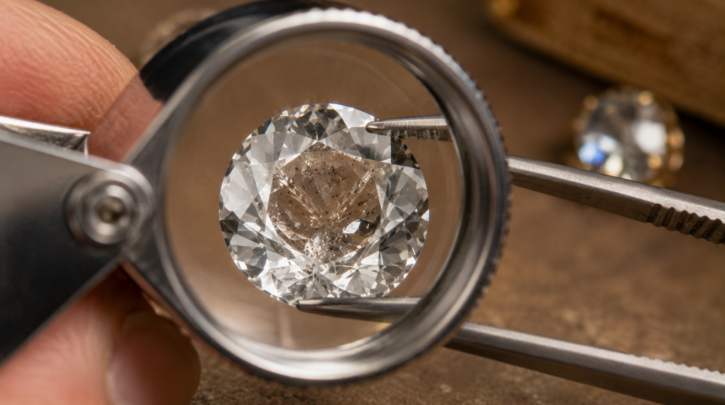
Natural stones typically show tiny natural inclusions under a loupe, while glass simulants often show small bubbles instead — a genuinely different tell-tale sign that a jeweler’s loupe or a strong magnifying glass can reveal, though correctly interpreting what you’re seeing takes real practice.
UV Light Reaction
Some stones fluoresce distinctively under ultraviolet light, offering a real supporting test professionals use — though fluorescence reactions vary enough across different stone types and treatments that this works best as one data point among several rather than a standalone confirmation.
Setting Quality as a Supporting Clue
Genuinely valuable stones tend to get set in carefully made mountings, which can offer a soft supporting clue — though it’s not a fully reliable rule, since both a valuable stone in a simple setting and a simulant in an elaborate setting genuinely occur.
Why Professional Testing Matters for Anything Valuable
Definitive identification, especially distinguishing similar-looking natural stones from each other or confirming lab-created versus natural origin, really requires professional gemological equipment like a refractometer or spectroscope — home tests can raise or lower suspicion, but professional certification is the reliable path for anything of real value; see our appraisal guide for how professional gemstone evaluation fits into a broader jewelry appraisal.
Diamonds Deserve Their Own Deeper Look
Because diamonds are both the most commonly encountered and most commonly counterfeited fine gemstone, they warrant a more detailed identification framework of their own beyond these general principles; see our diamond identification basics guide for that dedicated deep dive.
Where Gemstone Jewelry Turns Up
Estate sales, inherited jewelry boxes, and antique malls remain the most common sources, and because gemstone jewelry spans such a wide value range — from costume simulants to genuinely significant natural stones — unidentified pieces are worth checking carefully rather than assuming based on age or appearance alone; see our buying guide for what to expect across different sourcing options.
A Reasonable Starting Approach
For an unfamiliar stone, working through the fog test, a loupe examination for inclusions, and a comparison against the setting’s overall quality in that rough order gives a reasonable first impression before deciding whether professional testing is worth the investment for a specific piece.
Building this habit into every unfamiliar-stone encounter pays off steadily over time as a collection grows.