
Diamonds cut before the modern era used genuinely different cutting styles than today’s standard proportions, and recognizing these antique cuts is a reliable way to help date a piece — while also understanding why collectors specifically value these older cuts on their own terms rather than treating them as simply inferior to modern cutting.
The Old Mine Cut
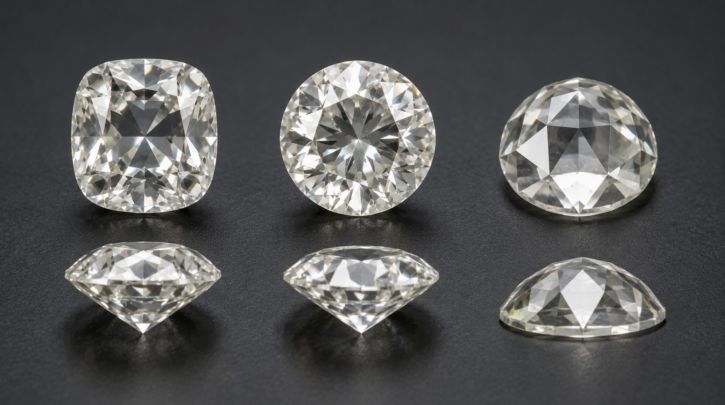
The Old Mine cut, roughly dating from the 18th and 19th centuries, is cushion-shaped with a high crown, a small table, and a notably large culet — a distinctive antique silhouette that produces a softer, warmer light performance than modern cuts, genuinely prized by antique jewelry collectors specifically for that different character.
The Old European Cut
The Old European cut represents a later evolution, roughly spanning the late 19th into the early 20th century — rounder than the Old Mine cut but still retaining a smaller table and larger culet than modern proportions, genuinely transitional between the older Old Mine style and the fully modern round brilliant that eventually replaced it.
The Rose Cut
The Rose cut is one of the oldest diamond cutting styles still recognized today, flat on the bottom with a faceted domed top and no pavilion at all — a historically significant, genuinely low-brilliance look by modern standards, but one with real romantic and historical appeal to collectors of earlier antique pieces.
The Modern Round Brilliant: A Mathematical Breakthrough
The modern round brilliant cut traces to Marcel Tolkowsky’s 1919 mathematical work calculating the ideal proportions for maximum light return and sparkle — a genuine leap from the more intuitive, craft-based cutting approaches used for Old Mine and Old European cuts, and the foundation for the cut-grading framework used across the diamond industry today; see our diamond identification basics guide for how modern cut grading actually works.
Cut Style as a Genuine Dating Clue
Because these cutting styles developed and were gradually superseded across fairly well-documented eras, the specific cut style of a diamond set into a piece offers a genuinely reliable supporting clue for roughly dating that piece, independent of any other marks or design characteristics.
Antique Cuts Aren’t Simply ‘Worse’
It’s worth pushing back on the assumption that antique cuts are simply inferior versions of the modern round brilliant — they represent a genuinely different aesthetic tradition, prized specifically for their softer, warmer light performance, and command real collector interest and premium pricing precisely because of that distinct character rather than despite it.
Why Re-Cutting Destroys Real Value
Some antique cut diamonds have been re-cut into modern shapes over the decades by owners hoping to “improve” sparkle — collectors now widely view this practice as having destroyed genuine historical and collector value in many cases, since it permanently erases the distinct antique character that made the stone specifically valuable to begin with; see our repair guide for the broader principle of preserving original antique character over aggressive restoration.
Identifying an Antique Cut Diamond
A jeweler experienced with antique cuts can confirm whether a stone is a genuine period Old Mine, Old European, or Rose cut versus a later re-cut or a modern stone set into an antique-style mounting — worth seeking out that specific expertise before assuming a cut style based on general appearance alone, given how much the distinction matters for both authenticity and value.
Antique Cuts Command Their Own Market
A confirmed genuine antique cut diamond, especially in an original, unaltered setting, often carries a real premium among specialist antique jewelry collectors compared to a similarly graded modern cut stone of the same size, reflecting genuine, sustained demand for authentic period material; see our jewelry value guide for how this kind of specialist demand factors into overall value alongside setting, maker, and condition.
A Growing Appreciation Among Collectors
Antique cut diamonds have seen genuinely renewed collector interest in recent years, as more buyers specifically seek out the warmer, softer light performance and historical authenticity these cuts offer — a trend worth keeping in mind before assuming an antique cut stone is simply an outdated version of something better available today.
Understanding that shift in appreciation helps explain why a genuine antique cut is worth preserving rather than modernizing.