
Cleaning vintage jewelry safely starts with recognizing that different materials need genuinely different approaches — a one-size-fits-all cleaning routine is actively risky given how much a single jewelry box can mix solid metal, glued costume settings, porous gemstones, and organic materials like pearls.
Fine Jewelry: Generally Safe With Gentle Washing
Solid gold, silver, and platinum jewelry set with hard, untreated gemstones generally tolerates gentle warm water, mild soap, and a soft brush reasonably well — though porous or treated stones need much gentler handling, covered separately below.
Porous and Treated Stones Need Special Care
Opal, turquoise, and emeralds treated with fracture-filling oils or resins to improve clarity can all be damaged by soaking or soap, which can strip protective treatments or allow moisture into porous stone structure — worth researching a specific stone’s care needs before assuming standard fine jewelry cleaning applies universally; see our gemstone identification guide for background on different stone types.
Costume Jewelry Should Not Be Soaked
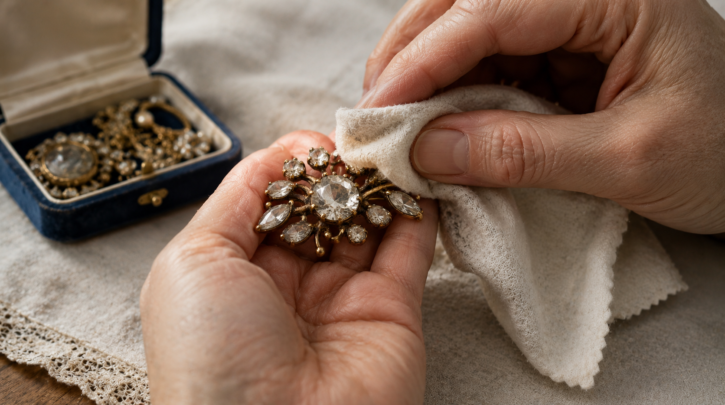
Unlike solid fine jewelry, costume pieces generally shouldn’t be submerged in water at all — glued rhinestone settings can loosen or fail entirely with water exposure, and the base metal components common in costume construction can corrode. A barely damp cloth, used gently, is the safer approach; see our costume jewelry identification guide for more on the construction differences that make this distinction matter so much.
Pot Metal Disease: A Real, Specific Concern
Pot metal, the zinc alloy commonly used in costume jewelry construction, can develop a genuine deterioration condition collectors call pot metal disease — a white or grey, crumbly corrosion, often accelerated by humidity, that’s difficult or impossible to fully reverse once it starts. Affected pieces can become genuinely fragile, which is worth knowing before attempting any cleaning or repair on a pot metal piece showing early signs of this condition.
Avoid Ultrasonic Cleaners on Fragile or Treated Pieces
Ultrasonic cleaners are safe for many solid fine jewelry pieces with untreated hard gemstones, but they can actively damage glued costume jewelry, treated or porous stones, and pieces with hairline cracks — worth confirming a piece’s construction and stone treatment status before using one, rather than assuming it’s a universally safe cleaning method.
Pearls Need an Entirely Different Approach
Pearls are organic and genuinely delicate — never use jewelry cleaner, an ultrasonic cleaner, or harsh chemicals on them. Perfume, hairspray, and even ordinary skin oils can affect pearls over time, and routine care is limited to wiping gently with a soft cloth after wearing rather than any deeper cleaning process; see our pearl restringing guide for the other major pearl-specific maintenance consideration.
Don’t Polish Away Intentional Oxidized Finishes
Some sterling silver jewelry is intentionally oxidized or antiqued to highlight design detail in recessed areas, and aggressive polishing can remove that deliberate finish entirely; see our sterling silver jewelry marks guide for more on recognizing this intentional design choice before cleaning it away by accident.
Confirm Composition Before You Clean
Knowing whether a piece is fine jewelry or costume changes the entire cleaning approach — our free 5-Second Real Gold vs. Costume Jewelry Checklist helps you confirm which one you’re holding first.
When in Doubt, Clean Less Rather Than More
For any piece where the material, construction, or stone treatment is genuinely uncertain, a gentle wipe with a soft dry cloth is always safer than an aggressive cleaning attempt — tarnish and light dust can be addressed later once you’re more confident about what you’re actually working with.
Cleaning Newly Acquired Pieces
A piece freshly brought home from an estate sale often just needs a gentle wipe to remove years of accumulated dust — resist the urge to deep-clean immediately, since aggressive first-cleaning attempts are exactly the kind of heavy-handed treatment most likely to damage a piece whose construction and materials you don’t yet fully understand.
Building a Simple, Sustainable Routine
Wiping jewelry with a soft cloth after each wearing, reserving deeper cleaning for pieces that genuinely need it, and always erring toward the gentler option when uncertain together form a routine that protects vintage jewelry for decades without the wear that overly aggressive or overly frequent cleaning would cause.
Costume Jewelry Cleaning: A Quick Reference
| Material | Safe Approach | Avoid |
|---|---|---|
| Solid gold/silver, hard stones | Warm water, mild soap, soft brush | Prolonged soaking of treated stones |
| Costume/rhinestone pieces | Barely damp cloth only | Submersion, ultrasonic cleaners |
| Pearls | Soft dry cloth after wearing | Any liquid cleaner, chemicals |
| Pot metal | Very gentle dusting | Moisture, humidity exposure |