
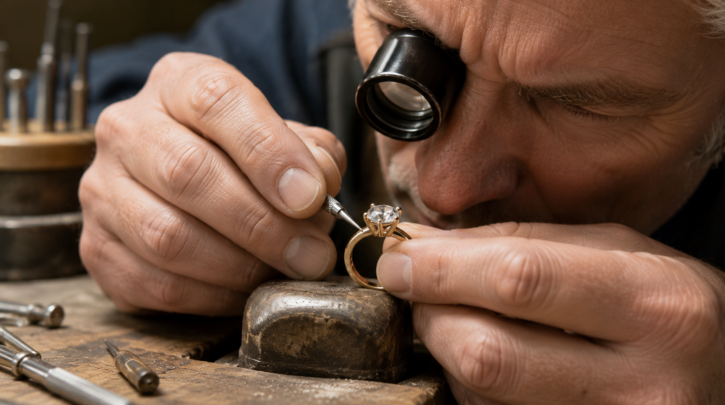

Vintage jewelry develops predictable kinds of wear over decades, and knowing what’s actually repairable — and what a repair genuinely involves — helps decide whether restoration is worth pursuing for a specific piece.
Broken Clasps
A broken or malfunctioning clasp is one of the more straightforward professional repairs, generally involving replacing the clasp mechanism itself without affecting the rest of the piece — a genuinely low-risk repair for most necklaces and bracelets.
Bent Prongs: A Genuine Safety Issue
A bent or worn prong holding a gemstone in place isn’t just a cosmetic issue — it’s a genuine risk that the stone could loosen and fall out entirely. Periodically checking prongs, especially on ring-mounted stones that see regular contact and wear, catches this problem before a stone is actually lost rather than after.
Missing Rhinestones
Replacing a missing rhinestone requires carefully matching size, color, and cut to the surrounding stones for the repair to look right — a genuine skill that takes practice, since a mismatched replacement stone can be more visually distracting than the original gap.
Broken Pins and Catches on Brooches
Pin mechanisms and their catches see repeated mechanical stress over decades of use, and a broken or worn pin assembly is a common, generally repairable issue for an experienced jeweler, similar in scope to a clasp repair.
Enamel Repair: A Genuinely Difficult Specialty
Cracked or chipped enamel is difficult to repair invisibly, and professional enamel restoration is a specialized skill in its own right — it’s worth being honest that even skilled professional repair work on enamel damage may remain somewhat visible afterward, rather than expecting a full, undetectable restoration.
Pot Metal’s Limited Repair Options
Because pot metal is brittle and prone to the deterioration collectors call pot metal disease, repair options are genuinely more limited than with sterling or gold; see our cleaning guide for more on this specific condition. For severely deteriorated pot metal, replacement or reproduction parts are sometimes a more practical option than attempting to repair the original material directly.
Weighing Repair Cost Against Value
As with every collectible category, repair cost is worth weighing honestly against a piece’s actual value and how much you’ll wear or treasure it afterward — for a genuinely rare or sentimental piece, repair is often clearly worth it, while for a common, modestly valued piece, the repair cost may exceed what the piece is actually worth.
Fine Jewelry vs. Costume Jewelry Repair Needs
Costume jewelry repair genuinely requires different skills and materials knowledge than fine jewelry repair — a jeweler experienced with sizing and repairing solid gold rings may not have the specific experience needed to properly address a glued rhinestone setting or deteriorating pot metal, so it’s worth confirming relevant experience with the specific material before committing a piece to repair.
Getting Multiple Repair Estimates
For anything beyond a minor, inexpensive fix, getting estimates from more than one qualified jeweler before committing helps confirm both a fair price and a consistent understanding of what the repair actually involves, since techniques and pricing can vary meaningfully between different repair professionals.
Documenting Repairs Over Time
Keeping a simple record of what’s been repaired on a piece, when, and by whom creates a useful history worth having both for your own reference and for any future buyer or appraiser, since disclosed, professionally done repairs are generally viewed far more favorably than undisclosed ones discovered later.
A Reasonable Approach to a Damaged Collection
Prioritizing repairs on pieces with genuine sentimental or collector value, getting cost estimates before committing, and accepting that some damaged pieces are more sensibly replaced than repaired together make for a realistic, sustainable approach to maintaining a vintage jewelry collection over the long term.
Trusting the Process as You Learn
It’s normal to feel uncertain about whether a specific repair is worth pursuing, especially early in a collecting journey — that uncertainty fades with experience and a few honest conversations with qualified repair professionals about cost versus value for a specific piece.