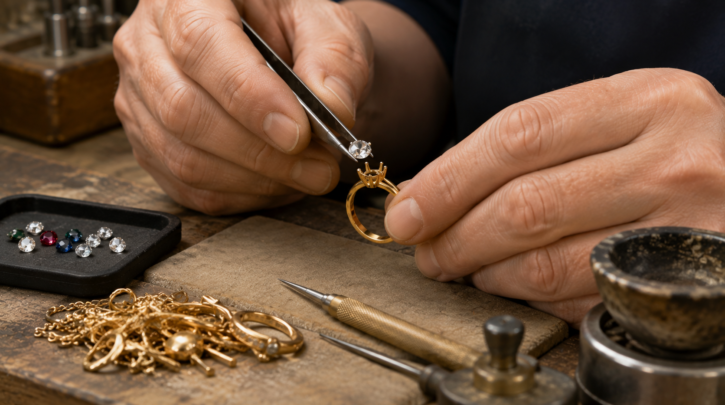

A gemstone is worth nothing to a refiner. Their process pays for the gold they can recover, full stop — a diamond or colored stone sitting in a piece headed for the melting pot has no role in what they’re being paid to extract, and it isn’t always removed carefully, or removed at all, before the metal goes in. That single fact is why the two checks that matter most before melting anything aren’t optional caution — they’re the difference between capturing a piece’s real value and losing part of it permanently. Check for a maker’s mark. Get any stones assessed separately. Do both before you decide anything else.
Gemstones Have Zero Melt Value — And Refiners Don’t Always Save Them
Melting doesn’t chemically destroy a gemstone, but a refining process built around recovering metal has no built-in incentive to protect what’s set into it. Stones get discarded, damaged, or simply lost in bulk-processing operations that weren’t asked to preserve them and aren’t paid to. A stone worth removing and assessing on its own is worth removing before the piece goes anywhere near a refiner — never after.
Check for a Maker’s Mark First
Before weighing anything or calculating melt value, look for a maker’s signature or hallmark alongside the karat stamp. A recognized maker’s mark routes a piece toward the collector and estate-dealer market rather than the melting pot, since collector demand for a documented maker regularly pushes value to several multiples of what the same piece would bring as scrap. A plain, unmarked piece doesn’t carry that premium — which is exactly the distinction this whole decision turns on.
The Profile That Usually Doesn’t Beat Melt Value Intact
A plain gold band with no maker’s mark, no stones, and visible damage or heavy wear is the piece melt value was essentially designed for — there’s no signature to interest a collector and no stone to assess separately, so the calculated melt value is very often close to the piece’s actual ceiling. This is the one profile where melting isn’t a compromise; it’s simply the most the piece is likely to be worth.
The Core Comparison
Once you’ve checked for a mark and pulled any stones for separate assessment, the decision comes down to comparing the metal’s calculated melt value against what the piece would realistically sell for intact to a collector or design-focused buyer. See our melt value guide for how to calculate that baseline figure.
Antique-Cut Diamonds Deserve Special Caution
A setting might genuinely be scrap-worthy while the diamond mounted in it, particularly an antique cut like an Old Mine or Old European cut, is genuinely valuable and worth preserving separately rather than treating as an afterthought. See our antique-cut diamonds guide for why these older cuts specifically deserve extra care before any metal gets melted down.
When Melting the Metal Makes Sense
Once the mark check and stone check both come back empty — no signature, no stones worth separating out — and the piece is in poor condition or otherwise unappealing to collectors, melt value can genuinely exceed what a design-focused buyer would pay, making melting the more financially sensible choice for that specific piece.
When Selling Intact Makes Sense
For pieces carrying a recognized maker’s mark, in good condition, or featuring genuinely valuable gemstones already removed and assessed separately, collector and design-focused demand usually pushes value well above simple melt value. See our value guide for the factors most likely to push a piece’s worth above its melt value alone.
Gold Doesn’t Automatically Mean More Valuable Than Costume
It’s worth remembering that a modest, common gold piece can be worth less than an exceptional signed costume piece from a top maker, despite having genuine melt value that the costume piece entirely lacks. See our most valuable costume jewelry guide for real examples of this pattern.
A Reasonable Decision Process
- Confirm karat and composition, and check specifically for a maker’s mark or hallmark
- Remove and separately assess any gemstones before considering the metal alone
- Check recent completed sales for the specific maker or design, if identifiable
- Calculate the metal’s melt value as a comparison point
- Compare the figures honestly before deciding
- For anything genuinely uncertain, get a professional opinion before proceeding
Confirm Composition Before Any Decision
Before running any melt-value math, our free 5-Second Real Gold vs. Costume Jewelry Checklist confirms you’re actually holding gold in the first place.
When in Doubt, Don’t Melt Yet
Because melting forecloses every other option permanently — for the metal and for any stone that didn’t get pulled first — any genuine uncertainty about a piece’s maker, stones, or value is a reason to pause and research further, or get a professional appraisal, rather than defaulting to melting simply because the process feels faster. See our appraisal guide for how that professional check works.
A Middle Path: Melting Duplicates, Keeping Standouts
For a large mixed collection, it’s worth considering a hybrid approach — melting genuinely common, damaged, unmarked gold pieces while setting aside anything that turns out to carry a maker’s mark, an unusual design, or a genuinely valuable gemstone, rather than treating the whole collection as a single all-or-nothing decision.
Emotional Decisions Deserve Extra Caution
Melting an inherited collection can feel like a quick, practical way to resolve an emotionally complicated situation, but that same emotional pressure is exactly why it’s worth slowing down first — a decision made in haste during a stressful time is harder to feel good about later than one made with a clear head, a mark check, and a stone assessed before anything got melted.
A Realistic Timeline for This Decision
Taking a few weeks to properly check for a maker’s mark, remove and assess any gemstones, and possibly get a professional opinion costs very little compared to the value of getting an irreversible decision right — there’s rarely a genuine urgency that requires melting anything immediately.